Kjartan Holm and Sin Fang are two of Iceland's most quietly prolific composers. Between them, they represent two very different roads into the same tight-knit Reykjavík music scene. With his breakout single "I Sing I Swim", Sin Fang reached international ears after landing on Grey's Anatomy, and continued to build a parallel career scoring film and television whilst releasing neo-classical/ambient albums. Kjartan Holm, meanwhile, is the more classically trained half of the pair - a composer with a background in tonal composition who has scored for film, theatre, dance, and video games, and who has spent years studying how noise and sound physically affect the body and brain. The two are also longtime collaborators outside their own projects across music and beyond.
That shared sensibility for texture and atmosphere is exactly why Kiasmos tapped Holm and Sin Fang for their remix of II (released via Erased Tapes). After the record took the duo across four continents on a sold-out world tour, Arnalds and Rasmussen invited a handful of trusted collaborators to completely reimagine it for II Reworked. Holm and Sin Fang were given three of the album's eleven tracks, and throughout this interview we dive into their creative process, their Icelandic background, and so much more.
When people think of Icelandic music that's broken through globally, it's rarely conventional mainstream music like Pop, Soul, or R&B, it's almost always something more distinctive. I'm interested to hear why you think that is? And do you think that says something about Icelandic identity or values, rather than just being a coincidence?
I think the scene here being so small and really has very little chance of making a living out of music makes the scene pretty uncompetitive, and people are in general very supportive of each other. I have not found that in other, larger music communities I've been working in abroad. Being so small and close-knit, we had very good role models to look to as well, Sigur Rós, Múm, Björk, etc. you see them around town doing their thing, and I think that makes people think to themselves, "hey, maybe I could do that as well". The breakout artists in our formative music years were all doing very original and inspiring music, which I think inspired a lot of my generation to try and make their voices unique as well.
Kjartan, is there anything you had to consciously unlearn from your formal training in order to make music that feels loose or intuitive?
No not really. Even though I studied classical composition for many years, I don’t really feel like that gets in the way of making ambient/experimental music. If anything, it just helps when it comes to structural decisions and tonal shaping. A lot of the music happening in France, Greece, and Italy during the 70s can really be thought of as some sort of a precursor to what we know as ambient music today.
Stay up to date.
New music and exclusive updates in your inbox weekly.
And for Sin Fang, you came to music without formal training, starting out in visual art. Do you think not knowing the "rules" gave you more freedom, or were there things you had to figure out the hard way that formal training could have been a shortcut?
I had basic guitar and piano skills when I started art school and had been playing in not so serious punk'ish bands so I wouldnt say I knew nothing when I started out, but I do think approaching music with a visual art background has helped me especially in film scoring, I tend to look at music from a conceptual place first and then figure out the technicalities on how to make the things in my head into reality. I have now been making music professionally for almost 20 years (!!), and I can say not knowing the "rules" does not help you when making music. I recommend that if you are making music to brush up on a little music theory and learn at least the basics; after all you got to know the rules to break them.
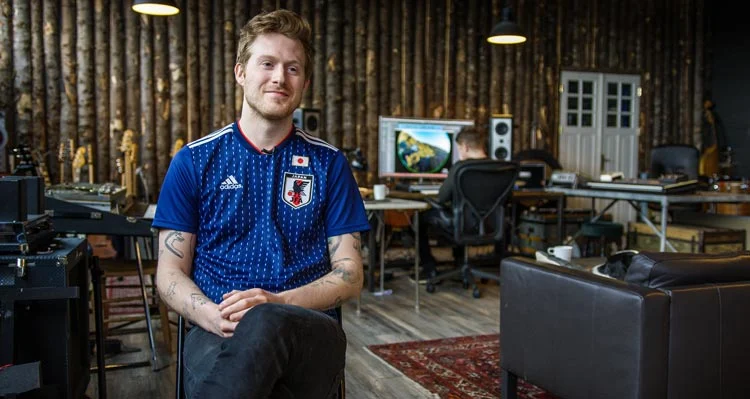
How did your paths first cross, and what do you remember about that first session together? Was it easy right away, or did it take some figuring out?
We probably met at Sigur Rós shows years ago, but properly met when Kjartan was staying at Alex Somers' studio in the basement, babysitting their dog Atlas - and I was working in the studio upstairs. He then started dating my wife's sister and joined the family. I don't remember when we first worked together, but it has always been easy for us to collaborate; we have a similar aesthetic in music even though we are very different musicians.
If you had to describe what the other person brings to a collaboration that you find a bit tough to do yourself, what would it be?
Kjartan is a better player and musician than me that's for sure, I'm good at bringing the conceptual work and ideas around our work. When we work on scoring Kjartan will write out the arrangements for the strings and I will mix and master the music so I think we have a pretty wide skill set between the two of us.

You recently reworked Kiasmos tracks together for II Reworked. How is remixing someone else's material as a duo different from writing something from scratch together?
It's very fun getting the stems from a band like Kiasmos, they are very ambitious with how everything sounds, and you can really feel all their music is very intentional and has been laboured over. It's different, as when we remix we try to keep the soul of the original piece but add our own spin to it. We loved working with the Kiasmos boys as their music is very melodic and texture-filled underneath the pounding drums, so making ambient versions of the tracks came pretty easily.