For over a decade, TIDAL has built its identity around a simple pitch - better sound and a fairer deal for the people making the music. Not only were they the first major streaming service to offer lossless audio, but they also lean into a royalty structure and payout model marketed as more favorable to musicians than the industry standard.
Over the past 3 years, though, there has been a force that has risen over the music industry that has tested the ideals of each major streaming platform, and how they protect the interests of artists and their users. I'm talking about generative AI music and AI fraud, respectively. We invited Robert Andersen, Tidal Lead, for an interview to dive deeper into the company's policy around this subject, and how they are honoring their core beliefs in the age of AI. He leads TIDAL and has been shaping the look and feel of Block's products (the company behind Square and Cash App) since he was its very first employee back in 2009. But first, let's have a look at how the company has shaped itself and its actual policy on where it stands with AI.
A Brief History of TIDAL
At a time when most DSPs were fine with compressed sound, TIDAL came through the gates in 2014 as THE high-fidelity streaming service. The following year, however, was the period when the streaming service pierced into mainstream consciousness in such a compelling manner. Jay Z's acquisition of the company led to a relaunch as the first artist-owned streaming platform, rolling out with a huge lineup of co-owners including Beyoncé, Rihanna, Kanye, Madonna, and the list goes on. This is when the idea of better payouts for musicians, more control, and a real alternative to Spotify and Apple Music bloomed.
In 2021, Jack Dorsey (American tech entrepreneur and businessman) and his company Block stepped into the picture and took majority ownership. Through these transitions, they've remained loyal to their cause of putting artists first by continuing to champion better payouts, greater creative control, and a more artist-centric approach to streaming.
A Look At TIDAL's AI Policy
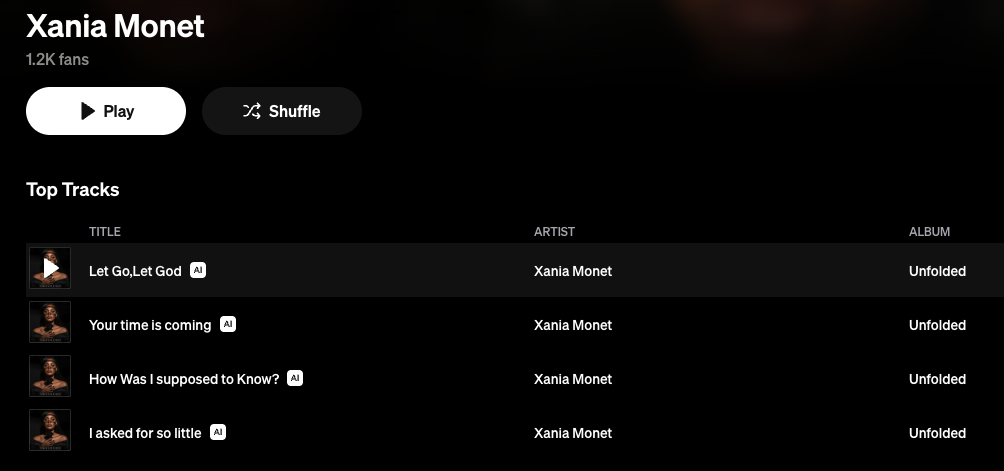
If we take into account the above, it links so well with what happened back in June 2026. TIDAL rolled out this new policy specifically around AI-generated music, which stated that they're not banning AI music outright. However, if a track is judged to be fully or substantially AI-generated, it just won't earn any royalties, tips, or direct payments. At this moment, a line was drawn between AI as a tool artists use (which they're totally fine with) and music that's essentially fully machine-made with no real human hand in it. Furthermore, tracks also get slapped with an "AI" label so listeners know what they're getting. This policy seeks to not only protect royalties for human artists, but also preserve transparency for listeners.
Stay up to date.
New music and exclusive updates in your inbox weekly.
Below is the conversation between Robert Andersen and me.
TIDAL has decided AI-generated music won't be eligible for monetization on the platform - walk us through how that decision came about?
Every day, a wave of wholly AI-generated tracks appear in our catalog via 3rd party distributors. Some of this content is designed to impersonate other artists, leading to confusion and stolen streams from legitimate fans of legitimate artists. It’s also been discovered that many generative models have trained off the work of artists without compensation, attribution, or permission. None of this feels like it’s protecting artists or rights holders, so we simply aren’t paying royalties for it.
Plus, our customers complained to us about it. A lot of it is musical spam. People want to know what they’re listening to, and that it came from a legitimate human artist. This is why we clearly label any profiles, albums, or tracks that are wholly AI-generated – with the option to turn all AI-tagged songs off completely.
Our approach will evolve over time as rights holders and generative music platforms develop licensing models, and we’re paying close attention to how the technology is evolving. TIDAL will always be committed to protecting the authenticity and livelihoods of artists and rights holders.
In your view, what's the toughest problem generative AI creates for the music industry right now? And on the flip side, in which ways do you feel like AI offers an opportunity for artists and music professionals?
Artists are worried that their craft and their livelihoods are at risk. Now anyone can generate something that sounds reasonably well-produced in seconds – no musical background required – for free. But I think this misses the point completely. We as humans are not just fans of music; we’re fans of the artists themselves and their individual perspectives that brought us that work. I think this is why I think AI music feels so soulless. Who and what you listen to will always be an emotional decision, and that goes deeper than the music itself.
On the non-generative front, there are many opportunities that AI can unlock. Artists are essentially small businesses, with fanbases that they want to nurture and eventually convert to customers through things like paid downloads, merch, and live events. If you’re trying to make it on your own, this is a lot of complexity to navigate without a team. I think AI will help many artists do more for their business operationally, ensuring that they can continue to retain 100% ownership of their work.
How does TIDAL's AI detection and labeling system actually work?
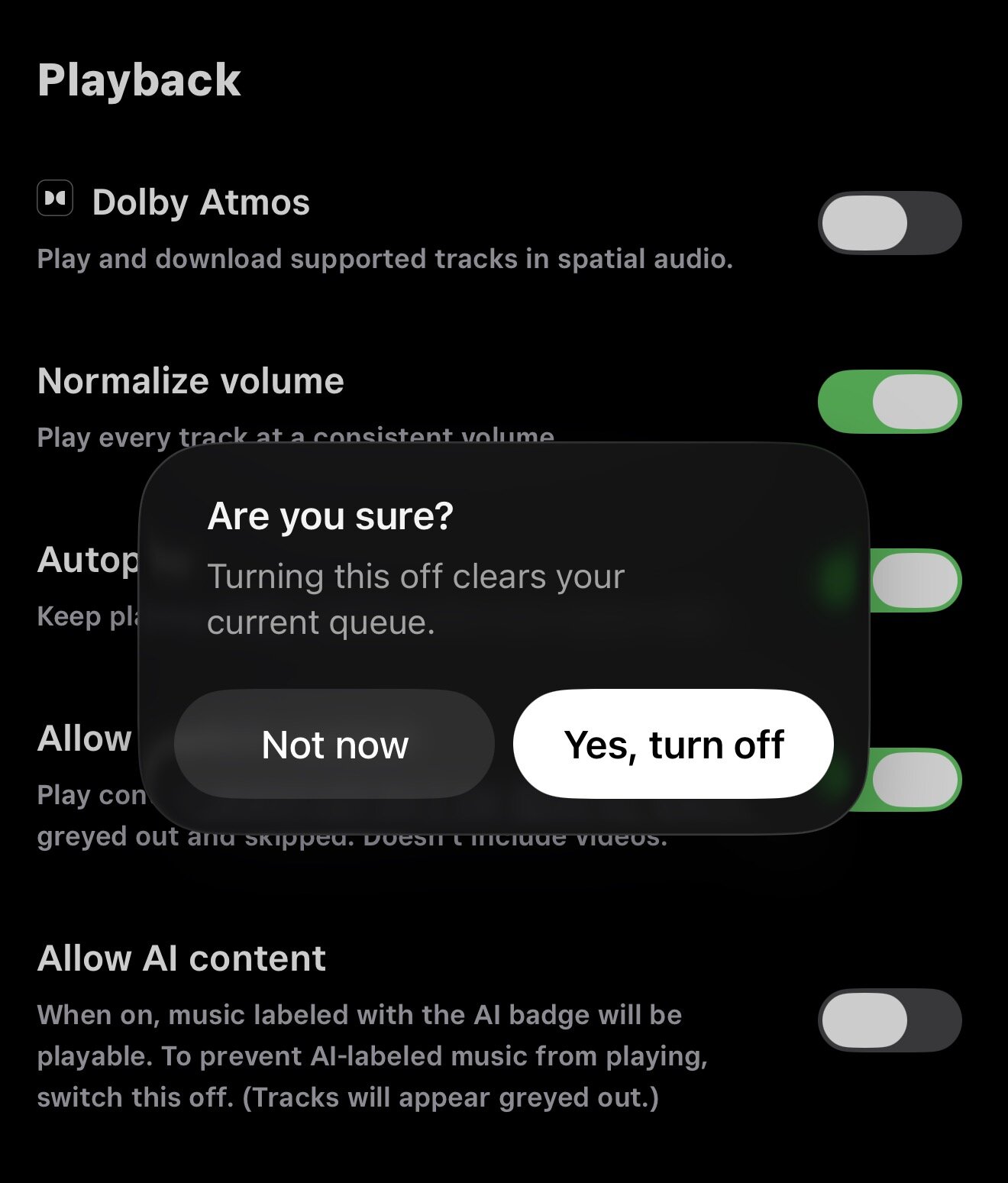
We’re working with an industry-leading external partner that detects when tracks are made with an AI platform. We label tracks that have a high probability of being wholly AI-generated. This provides transparency so listeners understand what kind of content they are listening to. Listeners can also turn off AI tracks in their app settings. Once off, AI-labeled tracks won't play, and they will also be removed from personalized recommendations as they're refreshed.
From what you have noticed, which genres have had the biggest influx of AI-generated music on TIDAL?
We see AI-generated music across all genres.
How important is transparency around generative AI music for artists and listeners, respectively?
For listeners, TIDAL wants to provide the highest quality music experience. Transparency via our AI tagging gives listeners the choice. Now you can filter out 100% AI content from your app experience completely. In my opinion, it should be an optional feature for all music platforms.
For artists, our AI tagging is protecting their authenticity while reserving the royalty pool for human-created music.
Are there more tools or systems that TIDAL has in place to flag fraudulent AI-generated content before it reaches listeners?
Managing fraudulent AI-generated content is just another layer to our already robust content moderation processes. We have always had to manage content that infringes copyrights, deceives listeners, or perpetuates streaming fraud - AI tools just make it a lot easier for people to take these actions. We are continuously updating and adapting our processes to ensure there is a high standard of content integrity on our platform.
Based on your understanding of how generative AI music is created, what's one characteristic of generative AI music that tends to go unnoticed, yet often gives away its origins?
Before AI tagging went live, our #1 clue that something was AI-generated was that the artist’s profile was typically empty or sparse on details. It’s not just the music that’s generated, it’s the album artwork, profile photo, graphic design, etc.
Is there anything else you'd love to add on the topic?
I think most people would be shocked to learn that they’ve unknowingly added an AI track or two to a playlist without knowing. So, you know, maybe go to tidal.com to import your playlists and start a free trial to find out if any of your playlists contain AI-generated content :)