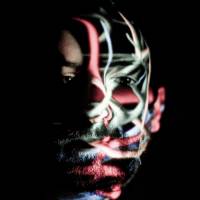
When I tell you that Max Cooper has collaborated with everyone from Zaha Hadid Architects to Nils Frahm, that honestly tells you everything you need to know about the kind of headspace he operates in. The Belfast-based multi-disciplinary artist, label founder, and former scientist has carved a reputation for being one of the most intellectually rigorous artists in the field of electronic music. Across 11 studio albums, Max has built a body of work that sits at this genuinely rare intersection of science, philosophy, and emotion. And it's not only his music that implores you to question everything, but his live shows too. They're more like immersive audio-visual experiences, the kind that make you wonder if you've accidentally wandered into a contemporary art installation.
In the next chapter of Max Cooper's journey, he unveils Feeling Is Structure - an album that explores the relationship between physical form and human emotion. It's packed with spatial concepts that are further realized across immersive touring experiences. One of the "structures" that is integral to the story of this album is the London Royal Albert Hall, as Max worked with the space itself to create the music. In this interview, he opens up about "success" in music, his new album, and much more.
Meeting somebody who is a fan of Max Cooper is usually quite exciting. Your music draws in quite a particular person thanks to the distinctive sound and, at times, the complex nature of the themes you tackle. Have you observed any patterns in the audience that connect most deeply with your work?
Those of us looking for something new, and with an emotional connection to music.
What aspects of your upbringing hinted that you’d eventually pursue something creative?
Stay up to date.
New music and exclusive updates in your inbox weekly.
I was a shy child, everything was too much for me, but that same overpowering experience of the world was the fuel for musical connection and expression as the solution - I do what I do because I love it and it keeps me sane. I also went to a Steiner School, so my early education was very arts-focused, even though my later education and work were all science.
Coming from a place not widely associated with left-field electronic music, how did you develop your taste for more experimental electronic music when you were starting out? Were there any pivotal discoveries for you?
I didn’t begin with anything experimental. I was all trance in the early Belfast and Ibiza days, but then when I arrived in Nottingham, I met someone the first day who took me out to a DnB event and blew my brain. Then I got really into hip-hop and breakbeat and had a residency playing that, followed by a residency at a techno event called Firefly. That, with my growing up around classical music of my parents and synth pop from my sister, and a constant interest in ambient and glitch, all fused into the mess of genres I cram into every show now. I had various attempts at sticking to a genre at times, but it invariably drove me mad, and in the end, I just decided to try and be myself and not worry about the techno police telling me my kick drums weren’t right.
How has your idea of "making it" changed as your career has progressed?
I never liked that term; it always seemed counterproductive somehow, and I didn’t let myself think like that. I preferred to focus on what I could control and how I could get enjoyment out of that process of learning and making music. I think that term is too tied to commercial measures of success, which ultimately drive weak art. So early on, I ignored it, but now, having spent enough time around music and arts to have a feel for it, I could reframe it to being “If I ever make something I believe is actually worthwhile as art,” then that would be making it…. I’ve had a go and scraped the service vaguely, but 10% of the way there at best. And I’m not being understated here, trying to come across well, that’s really what I believe. There’s powerful art out there that stands the test of time, but most of what is popular is driven by marketing budgets and aesthetic box-ticking exercises.
Your creative identity blends music, science, and visuals. If music channels your emotions, what does your relationship with science allow you to explore?
It doesn’t divide like that for me. Music is full of technical procedures, and science is full of aesthetics and feelings. Almost every scientific principle can be thought of in structural terms, and structure carries feeling innately - architecture influences our mood, for example, whether it’s the architecture of a building or the architecture of a biological interaction or physical system. I think making music is to become innately tuned in that sort of way - we spend our lives connecting our feelings to the abstract structures of musical form, so the scientific link can be quite direct. Not to say the two aren’t very different, of course they are, but more in terms of rigidity than emotion - science needs a hard-edged critical approach, whereas the arts need an embracing of inconsistency and misunderstanding, I think.
There's a long tradition that positions feeling and reason as opposing forces. When you say Feeling Is Structure on this new album, are you trying to collapse that distinction? And how does this album try to approach emotions differently compared to On Being?
Feeling is an essential part of reason. Take intuition, which carries out immensely complex tasks that conscious reason can’t (like how patterns in sound can be structured to represent ourselves in music), and guides us via feeling. It can be fallible, but it’s the main way we’re able to do most of what we do. They seem more complementary forces than opposing forces to me. Feeling is Structure is about our capacity to create meaning in the world around us, and also how the structures inside us map to this meaning. I am trying to collapse the distinction between those structures and the feeling itself, though.
Did the context of making Feeling Is Structure with the Royal Albert Hall in mind impose anything on your workflow, or did your creative process feel steady despite this new approach to making an album?
It demanded procedural pieces where I was making music by following some iterative process or other, as opposed to improvisation and free expression that had become more prevalent in previous records. So it’s more heavily electronic and rigid in some ways, but I was interested in how these sorts of partly rigid structures could carry our humanity just as much as more traditional approaches. It’s part of what seems to be happening now as our technology and our humanity become ever closer.
What was the problem/challenge at the centre of this album that took the longest to solve? What happened after you managed to find that solution?
The longest part of it was “This is a bridge” which took 4 years or so. It began when I met KC Yawp at a show in Seoul, who brought along the paintings he had been making in response to my music. They were powerful, but I didn’t know how I could respond to them to form a project. Later, I was working on part of the show which needed a musical transition between techno and dnb genres, which I love to include, but which don’t naturally connect. I turned to one of my favourite artists, Sorcery, for help. Merlin creates beautiful industrial experimental techno of various forms, very different from my world. What emerged was a bridge between Merlin’s world and mine, a bridge between genres, and a bridge between art forms, as I requested KC Yawp to work with dancers holding his paintings in sequence as a choreographed dance of sorts. He was also painting the bridging of the human form with a space-going posthuman structure. It all took a long time to come together, but it has become one of the most intense and impactful parts of the show in many ways.
Did Feeling Is Structure borrow anything from architecture - a principle, an idea, a way of thinking about space?
Yes, several chapters are specifically architectural. One of the first ideas I discussed with Architecture Social Cub who I worked on the Royal Albert Hall design, was how we could use static lasers to construct forms we could reveal with smoke. Pattern Index with Katia Schutz and Jack Fisher was also a study of repeating patterns in the built environment, along with my own delve into pattern generator layering melodically, and one of the films that led me into the project idea was also specifically architectural - the Brutalist. It fascinates me how we’re able to take these abstract structures and imbue them with our humanity. This capacity to create meaning is important too; life would be bleak without it.
With so many complexities associated with your craft, how do you stop yourself from overthinking and redirecting yourself back into a flow-like headspace?
Making music is nearly always a flow state situation, I think that’s just the nature of it. So it’s about setting the intentions at the beginning - often I’ll just have a feeling that is dominating my mind which I need to express, or an idea that excites me enough to yield the feeling of the music, or some visual sequence I’m working on too. I need some sort of starting state that is clear so that I can set that process off and have a chance that what comes out at the end carries enough of the same idea to get through to a listener. It’s an imprecise communication, but it seems that enough of the feelings get through to make it work.
What are you most excited about with AI technology in music, and what are you most concerned about?
Vibe coding is exciting, there are so many little project-specific processes that occur, which could be assisted by project-specific devices, but the problem has always been the time it takes to build them and the time available. Now, creative system ideas can be tested quickly, and new ways of being creative can start to emerge. We already use computers as a tool in this way, so it’s not a radical change there, but computers can become much more flexible creative tools now, which should lead to more, richer forms of expression. On the downside, we have the “big tune button” issues around prompting the final stage piece without the artistic process, which could threaten a lot of the industry. But I don’t make music in order to fulfil some business plan, I make it because I love making it and because it keeps me sane, and that can’t be changed by AI.
What's an area in your craft where you're feeling unsure about and really looking to improve on currently?
Dynamics, I need to improve my use of soft and loud, having come from a club culture format of running loud all the time. I need to spend more time listening to more music, as I generally get so busy with my projects, I don’t have enough time to take in others. I need to learn more, read more, and think more carefully. I need to push harder and take more time over each piece of music. I could keep going; I’ve got a lot I need to do!